Frequently Asked Questions (FAQs)
Understanding the Proposal
Why is the Library building new locations?
Garland County Library currently serves more than 100,000 residents across 735 square miles from a single location.
The biggest challenge is accessibility. Many residents, especially families and children, live too far from the current library. Garland County is tied for last place in Arkansas for library locations per county and ranks near the bottom statewide in library space per capita. The facilities plan is designed to make library services more accessible to people throughout the county.
What are voters being asked to approve?
Garland County voters are being asked to approve a 0.9 mill property tax to support bonds for new library facilities. The ballot proposal authorizes up to $34.8 million in bonds to acquire land and construct and equip capital improvements for Garland County public libraries.
What library projects are planned?
The Library's facilities plan includes three locations designed to provide better access to library services throughout Garland County. When the three-location plan is complete, the Library estimates that more than 95% of Garland County residents will live within approximately a 12-minute drive of a library.
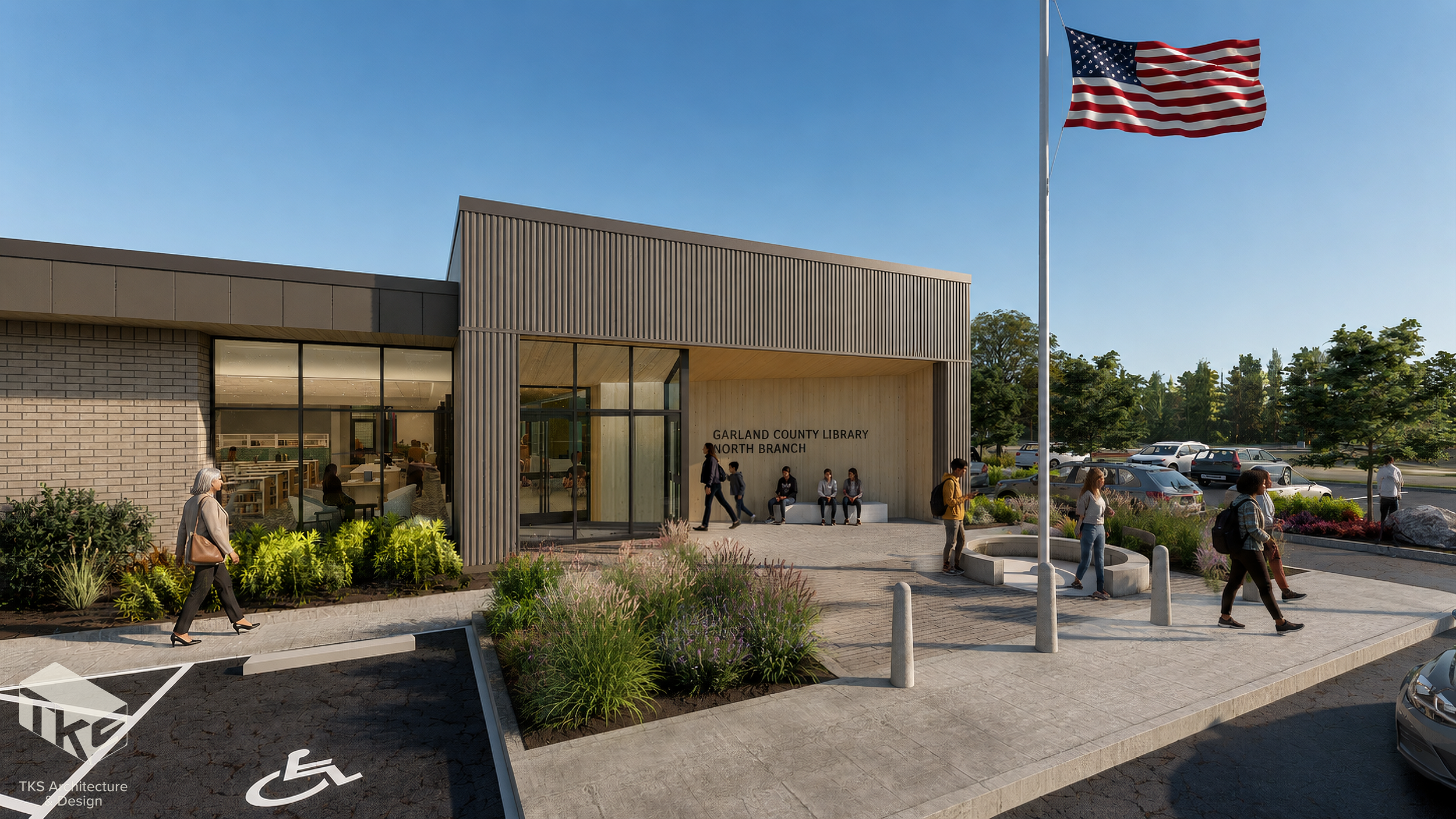
The North (Jessieville/Hot Springs Village) Branch is already under construction. The proposed Main (Downtown) Branch and West (Lake Hamilton) Branch depend on the outcome of the bond election.
When will the new facilities be built?
Parts of the plan are already underway. The North (Jessieville/Hot Springs Village) Branch is currently under construction. The proposed Main (Downtown) Branch and West (Lake Hamilton) Branch depend on the outcome of the bond election. If the proposal is approved, the Library plans to begin construction of the Main and West Branches in 2027.
Is the North (Jessieville/Hot Springs Village) Branch being paid for by this millage?
No. The North Branch is already funded and under construction. Construction began in June 2026 on the approximately 10,000-square-foot facility on Highway 7 North near Hot Springs Village. The proposed bond issue would support the next phases of the Library's facilities plan.
Where will the new Main (Downtown) Branch be located?
The proposed Main (Downtown) Branch would be located at Broadway and Olive Street in Hot Springs. The centrally located campus is planned to provide additional space for collections, technology, educational programs, children and teens, study and meeting rooms, community activities, and other library services.
Where will the West (Lake Hamilton) Branch be located?
The West Branch is planned for the Lake Hamilton area, bringing library services closer to residents in that part of Garland County. A specific location has not been selected. The West (Lake Hamilton) Branch is dependent on approval of the bond issue, and site selection would occur as the project moves forward.
Why New Facilities?
Why can't the Library expand or renovate the current building instead?
The Library explored this option through a facilities assessment in 2021. The assessment found that:
The current building already exceeds the size allowed for its construction type under building code.
Expansion would require costly fire-separation measures or construction of a mezzanine.
Building a mezzanine would require extensive structural work and could close the Library for up to two years.
Renovation costs would be significantly higher per square foot than new construction.
Even if expansion were feasible, it would not solve the accessibility challenge faced by residents who live farther from the current location.
Why can't the Library build onto the parking lot or nearby property?
Building code limitations prevent simple additions to the current structure. In addition, the property beside the health department is reserved under a longstanding agreement for potential future health department expansion. More importantly, expanding the current building would not improve access for residents across the county. The facilities plan addresses both space and accessibility needs.
Why doesn't the Library reuse an existing building?
Libraries have unique construction requirements, particularly for supporting the weight of book collections and public-use spaces. Most existing buildings would require extensive structural modifications, making reuse impractical or more expensive than new construction.
Why build more space if the Library doesn't seem busy?
The Library averages approximately 300,000 in-person visits annually. However, the facilities plan is not just about serving current users. It is also about providing library access to residents who cannot easily reach the existing location and ensuring the county is prepared for future growth.
Doesn't the Bookmobile already provide library access throughout the county?
The Bookmobile is an important way the Library reaches communities throughout Garland County, but it cannot provide everything available at a permanent library location. The Bookmobile will continue to complement the Library's permanent locations by reaching communities and residents throughout the county.
Permanent branches can provide regular hours, larger collections, children's and teen spaces, technology, meeting and study areas, programs, and other services that cannot be accommodated on a mobile library.
What will the new libraries offer besides books?
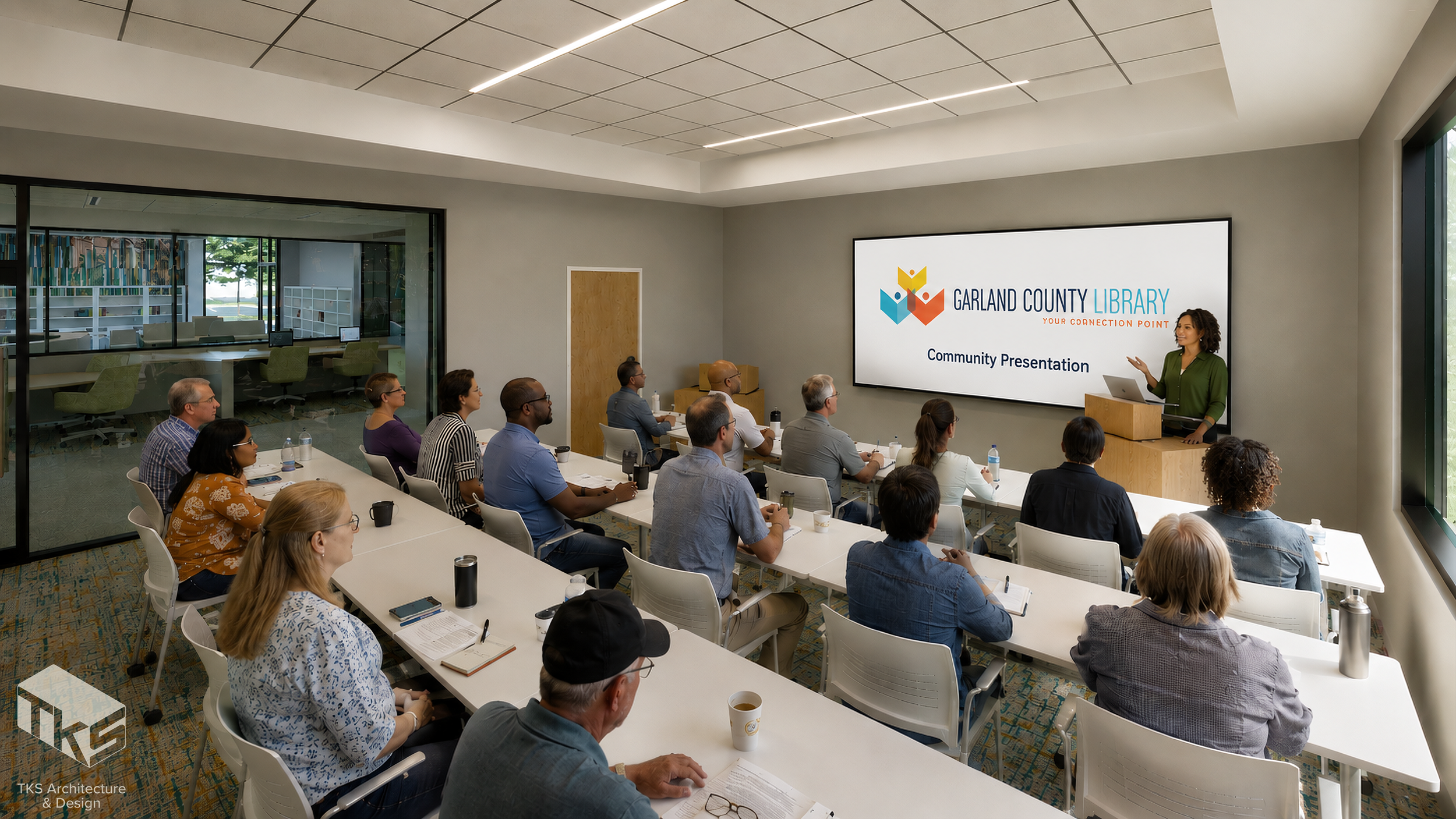
Today's libraries provide much more than books. Plans for the new facilities include children's and teen spaces, technology, study and meeting rooms, flexible workspaces, makerspaces, digital resources, educational programming, and community gathering spaces. Books and reading remain central to the Library's work, while the new facilities are being designed to accommodate the many ways residents use public libraries today.
Cost and Taxes
Why can't the Library use its existing funding to build new facilities?
Library operations are funded by a dedicated library millage authorized under Amendment 38 of the Arkansas Constitution. By law, those operating funds cannot be used for major capital construction projects.
How much will this cost taxpayers?
The proposal would authorize a 0.9 mill bond issue. Based on current average home values in Garland County, the estimated cost is about $3.70 per month for the average homeowner. However, the increase in Arkansas's homestead tax credit is expected to offset that amount for many homeowners, resulting in little or no net increase in property taxes.
How can I calculate the cost for my property?
The estimated cost is approximately $18 per year for every $100,000 of a home's market value. The actual amount will depend on the taxable value of your property and any property tax credits or exemptions that apply.
For example, a home valued at $200,000 would pay approximately $36 per year, or $3 per month. A home valued at $300,000 would pay approximately $54 per year, or $4.50 per month.
I heard this millage increase is a temporary tax that will "sunset." Is this true?
Yes. The millage is authorized by Amendment 38 of the Arkansas Constitution, which states the millage "shall never be extended for any purpose, nor collected for any greater length of time than necessary to retire such bonded indebtedness."
How long is the millage expected to be collected?
The millage can only be collected for as long as necessary to repay the bonds. Once the bonded indebtedness is retired, the millage ends. The bonds are conservatively estimated to be paid off in 14 years. That calculation is based on a 5% annual growth rate in the tax base. However, the historical average growth rate is 6.5%.
Will the Library need additional funding to operate the new locations?
No additional operating millage is needed as part of this proposal. The Library has existing resources available to support operations at the new locations. The 0.9 mill proposal is for the bond issue associated with new library facilities, not for the Library's ongoing operating expenses.
Could voters be asked for another millage increase later?
No additional operating millage increase is part of the Library's current facilities plan. Existing resources are available to support operations at the new locations. The 0.9 mill proposal before voters is specifically associated with the bond issue for new library facilities. As with any public institution, future funding decisions would depend on circumstances at that time, but no additional operating millage is anticipated as part of this plan.
What can the money from the bond issue be used for?
The bond issue is specifically for capital improvements to Garland County's public library facilities. The funds will be used to purchase land, construct the facilities, and purchase fixtures, furniture, and equipment for the new locations. The bond funds cannot be used for operating expenses.
Using the New Libraries
Will I be able to use all of the library locations?
Yes. All three locations will be part of the Garland County Library system and available to residents throughout the county. The branches are intended to make library services more convenient and accessible, not to create separate service areas.
Will I be able to request materials from another location?
Yes. The new locations will operate as part of one Garland County Library system. Patrons will continue to have access to the Library's broader collection rather than being limited to materials housed at the location they visit.
Will parking be free?
Yes. Parking will be free at all library locations. The new Main (Downtown) Branch is expected to have approximately 140 on-site spaces and will be adjacent to more than 200 additional free public parking spaces. If non-library parking becomes a problem, parking validation may be implemented.
Other Questions
What happened to the proposed Majestic project?
The Majestic property is owned by the City of Hot Springs. After hearing public feedback, the City of Hot Springs Board of Directors voted not to move forward with the Library’s proposal.
What will happen to the current library building?
The building is owned by Garland County and it would ultimately be up to elected officials. The building could be repurposed, sold, or mothballed. Repurposing ideas include a possible community center with multiple tenants, where a small library would remain as a neighborhood branch. Alternatively, the building could be sold to a commercial developer or mothballed for future use.
What happens if the bond issue does not pass?
The North (Jessieville/Hot Springs Village) Branch will continue toward completion because that project is already funded and under construction. The proposed Main (Downtown) Branch and West (Lake Hamilton) Branch depend on the bond issue and would not move forward as currently planned without that funding.